
Monopoly: a town waiting to be discovered, even “off the board”! Who hasn’t played Monopoly at least once? Between buying properties, building hotels, dealing with unexpected events and trying to avoid going to jail, the famous board game has been a part of the lives of entire generations, becoming one of the world’s best-known pastimes.
But there’s an interesting fact that perhaps not everyone is aware of: in Puglia, there really is a town that shares the same name as the game, and it’s one of the most fascinating places to visit whilst on holiday in this part of the region. Of course, the name of the game and that of the town have different histories. And it is precisely this curious coincidence that provides an opportunity to learn more about the origins of Monopoly and, above all, to discover the real town of Monopoli.
The true story of the Monopoly game: it all began with Lizzie Magie
The history of this famous board game is more interesting than one might imagine. For a long time, its invention was attributed to Charles Darrow, an American who contributed to the game’s commercial success in the 1930s. In fact, its origins date back several decades earlier and it is known as Elizabeth Magie, known as Lizzie.
In 1903, Magie devised a game called “”The Landlord’s Game", designed to illustrate and explain certain economic theories relating to land ownership and the consequences of monopolies. The game featured a board with properties to buy, rents to pay and dynamics very much like those we are familiar with today. Its distinctive feature was primarily educational: through the game, Lizzie wanted to demonstrate how the accumulation of property and the concentration of wealth could lead to inequality.
In 1904, he was granted a patent for his invention, which continued to circulate and become known in various versions in the years that followed.
Charles Darrow and the origins of modern Monopoly
In the 1930s, the game also came to the attention of Charles Darrow, who developed a version aimed at the general public. In 1935, Parker Brothers began marketing Monopoly, contributing to its extraordinary popularity. It was a huge success and the game quickly became an international phenomenon. The story of Elizabeth Magie, however, remained largely overlooked for a long time. It was only later that research into the game’s origins brought her pivotal role to light. An interesting fact: the game we now know as a challenge to amass property and wealth was actually created with the aim of prompting reflection on the very risks of economic monopolies. A story quite different from the one we imagine when we roll the dice!
Why is it called Monopoly in Italy?
This is where one of the most fascinating facts comes into play! The original name of the game is *Monopoly*, a word derived from the English term for ‘monopoly’, which in turn is linked to Greek roots evoking the idea of a single seller. When the game arrived in Italy in the 1930s, it was adapted for the Italian public, including a change to its name. The Italian version was called *Monopoli*, whilst the board was customised with the names of streets and squares inspired by the city of Milan.
That is why the game features names that have now become familiar, such as Vicolo Stretto, Vicolo Corto, Viale dei Giardini and Parco della Vittoria. The similarity to the name of the Apulian town is therefore a curious coincidence: the game is not named after Monopoli, and the streets on the Italian game board do not represent those of our town.
Monopoli in Puglia: where does the town’s name come from?
Now that the history of the game has been clarified, another question remains: where does the name of this Apulian town come from? The origin of the place name ‘Monopoli’ has been the subject of various interpretations over the years. One of the best-known theories links it to Ancient Greek, with a reference to the idea of a unique or singular city. According to historical tradition, the name is also said to be linked to the history of ancient Egnazia, an important centre on the Apulian coast whose inhabitants, following the hardships and changes in the region, are said to have found refuge in the settlement of Monopoli.
These are historical reconstructions and interpretations which should not be regarded as absolute certainty regarding the origin of the name. What we do know is that Monopoli boasts a very ancient history, with evidence recounting the passage of various civilisations and its strategic role along the Adriatic coast. In short, the name of the town and that of the game share a truly distinctive similarity, yet they tell two different stories.
The real Monopoli: what to see in this Apulian town
Let’s leave the game board aside for a moment and imagine arriving in the real Monopoli. Here, there are no squares to capture nor hotels to build, but a historic centre overlooking the sea, a charming old harbour, beaches and coves with crystal-clear waters, and a region just waiting to be explored. The best way to start your visit is to stroll through the narrow streets of the historic centre, letting yourself be captivated by the white houses, stone arches, small squares and flower-filled balconies.
Among the must-see attractions are the Old Port, with its traditional fishing boats, the Castle of Charles V, overlooking the sea, and the Cathedral Basilica of Maria Santissima della Madia, one of the city’s most important religious buildings. And then there’s the sea: along the coast, small coves, sandy beaches and stretches of shoreline alternate, offering the perfect setting for pleasant, relaxing days.
If you’d like to organise a visit, you can find out more in our guide dedicated to What to see in Monopoli and the places not to be missed.
Not just the sea: the flavours and traditions of Monopoli: A holiday in Monopoli wouldn’t be complete without discovering its cuisine. The connection to the sea is evident in many traditional local specialities: fresh fish, seafood, pasta dishes and recipes that tell the story of the town and its fishermen. But the area also offers another gastronomic dimension – that of the countryside – with seasonal vegetables, pulses, extra virgin olive oil and traditional country dishes. A wealth of flavours well worth discovering, perhaps by alternating a dinner at one of the restaurants in the historic centre with a stroll along the seafront. To find out more, you can also read our articles dedicated to What to eat in Monopoli and typical seafood dishes and to the Monopoli’s traditional country cuisine.
From the game to real life: why choose Monopoly for your holidays
The coincidence between the name of the game and that of the town is certainly curious, but you only need to arrive in Monopoli to realise that there is much more to discover. It’s a destination that offers a variety of experiences: strolls through the historic centre, days at the beach, walks through the olive groves, visits to nearby towns and moments spent savouring fine cuisine. Its location also makes it easy to reach other destinations in Puglia, such as Polignano a Mare, Alberobello, Ostuni and the villages of the Itria Valley. Whether you’re planning a weekend break, a summer holiday or a visit at any other time of year, Monopoli is a town that deserves to be savoured at a leisurely pace, going far beyond its curious namesake connection with the famous board game.
Discover Monopoli and find your holiday home in Puglia
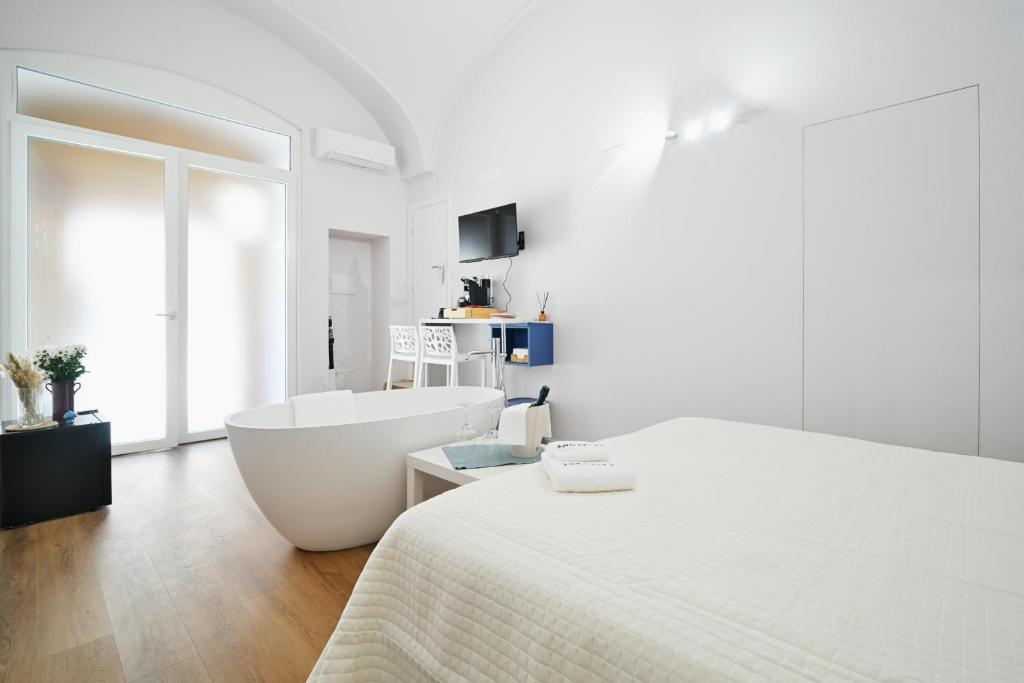
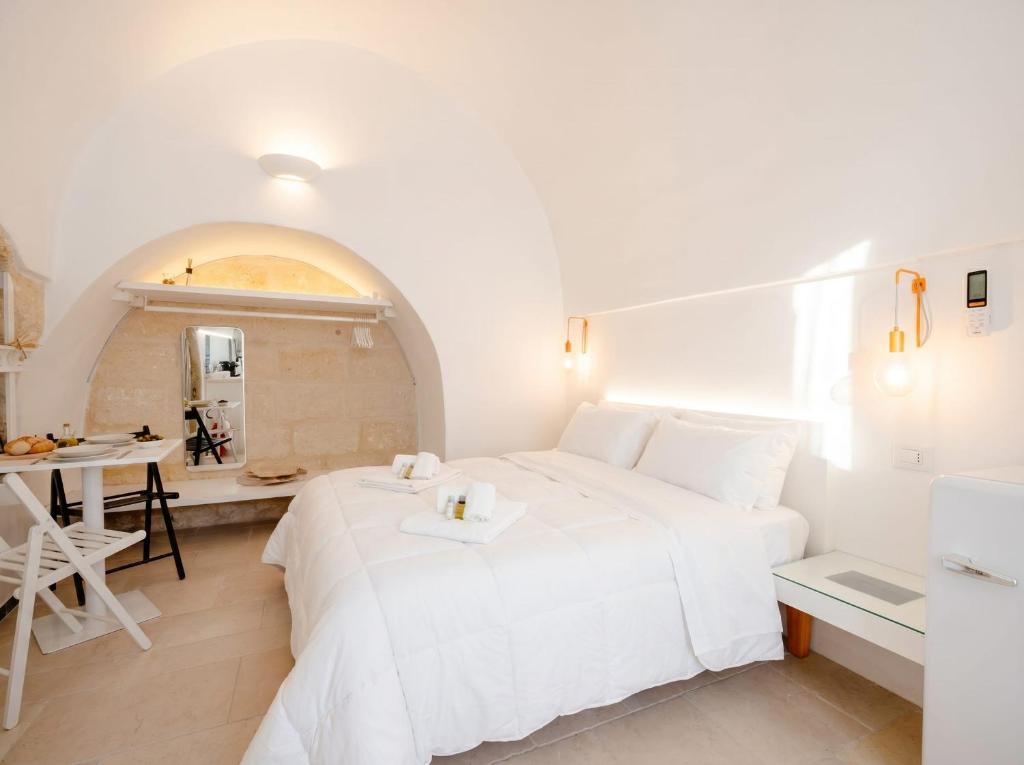
Now that you know the history of the game and the curious coincidence with the town’s name, all that’s left is to discover the real Monopoly! On HolidayHomeMonopoli.it You can explore the accommodation options in the area and find the one that best suits your needs: flats, holiday homes, bed and breakfast, residences and other types of accommodation. Contact the properties directly, compare the options available and organise your stay without paying any booking fees.
Because one thing is certain: Monopoly is far more enjoyable to experience in real life than to win on a board game!