

Polignano a Mare is one of Puglia's gems, famous for its charming historic centre, crystal-clear waters, sea caves and breathtaking views of the Adriatic coast. It offers numerous unmissable attractions and a variety of activities to fully experience the village.
Iconic places to visit in one day:
Monachile blade
The most famous beach, a pebble cove enclosed by high cliffs, is the photographic symbol of Polignano. Perfect for swimming, sunbathing and admiring the view.
Flat Cave
One of the most evocative sea caves, accessible by boat. It offers spectacular light effects on the water and unique views.
Blue Grotto
Famous for its intense blue reflections caused by the light filtering through the water. Accessible by boat excursion.
Ponte dei Lapilli Beach
Another small pebble beach, ideal for those seeking a quieter spot than Lama Monachile.
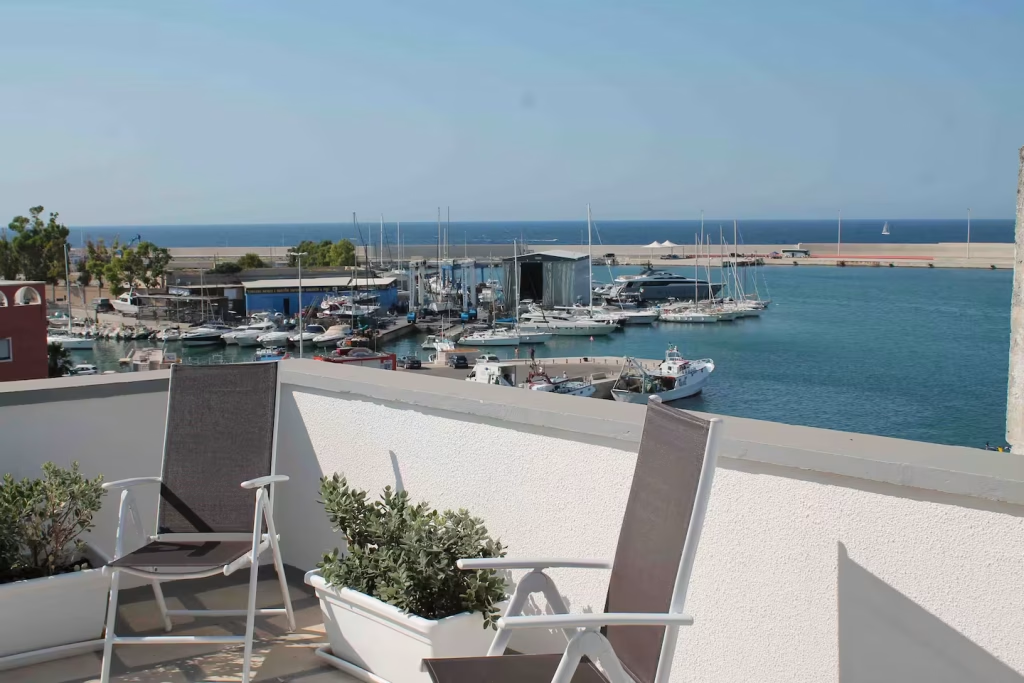
Cala Ponte Marina
A small marina where you can stroll among boats and yachts, an excellent starting point for sea excursions.
Among other things to see and do in Polignano, don't miss:
The historic centre with its picturesque streets, terraces overlooking the sea and charming little squares.
The Bourbon Bridge (over Lama Monachile), perfect for panoramic photographs.
The statue of Domenico Modugno, a famous singer-songwriter from the village, overlooking the sea.
The numerous coastal caves, including Grotta delle Rondinelle and Grotta delle Monache, accessible by boat or kayak.
Historic churches such as the Mother Church of Santa Maria Assunta.
Food and wine tours in the village's small restaurants and traditional trattorias.
Evening activities: Polignano offers clubs, panoramic bars and artisan ice cream parlours, especially in the historic centre.
Polignano a Mare is also the ideal starting point for boat trips, snorkelling, kayaking along the caves and romantic itineraries through the charming alleys. Make your visit even more special with a stop at one of the terraces overlooking the sea or by choosing a typical dinner based on local fish.
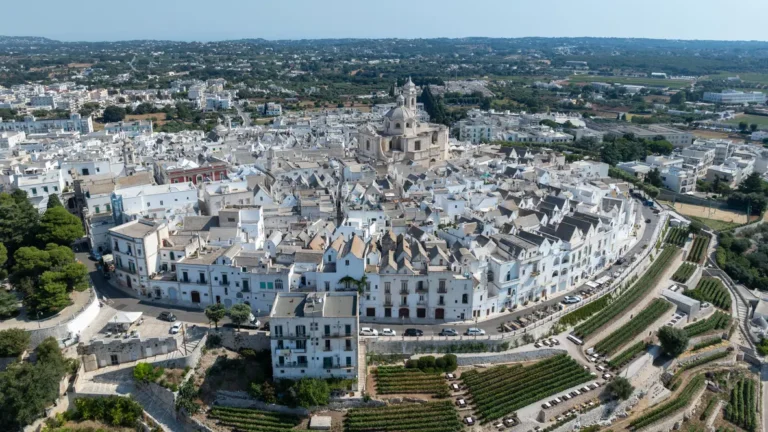
The beauty of Polignano is perfectly illustrated by its village clinging to the cliffs, with the characteristic contrast between the white houses and the intense blue of the Adriatic Sea:
Polignano a Mare, in Italy, is a coastal town with white buildings on a rocky cliff overlooking the Adriatic Sea.
History of Polignano a Mare and interesting facts
Polignano a Mare has a very ancient history dating back to the Neolithic period, with documented human settlements in places such as Santa Barbara and the Ipogeo Manfredi. As early as the 3rd century BC, the area became an important trading port for the Greek power of Taranto and, later, for the Romans. The latter left fundamental traces such as the Via Traiana bridge, still visible above the Lama Monachile, which connected Rome to Brindisi via Polignano.
During Roman rule, the territory was a valuable hub for trade with the East. According to some interpretations, Polignano was founded by Emperor Julius Caesar or Consul Gaius Marius of Arpino, but many scholars believe that an older settlement, called Neapolis or Polimnia, already existed and that it only later became a fortified and strategic centre. The name itself – probably meaning “prominent place” or «built on high» – refers to the village's privileged position on the cliffs.
In the 6th century, Polignano came under the rule of the Byzantine Empire, then was dominated by the Normans until 1194, and in the 16th century it came under Venetian rule, remaining so until it was ceded to King Charles V of Spain in 1530. The current historic centre developed on ancient medieval structures and is now characterised by white houses overlooking the sea.
Interesting facts and anecdotes:
Polignano was probably an ancient Greek sub-colony called Neapolis, linked to Syracuse.
The famous Bourbon bridge on Via Traiana is one of the symbols of the city.
Some legends trace the name back to “Polymnia”, muse of the arts, but this is more myth than history.
The historic centre preserves traces of Byzantine, Norman, Venetian and Spanish influences.
Polignano a Mare was the birthplace of Domenico Modugno, singer of “Nel blu dipinto di blu (Volare)”, and a statue of him stands at a panoramic viewpoint overlooking the sea.
Lama Monachile and its numerous sea caves were a refuge for monks and fishermen in centuries past.