
Those who choose Monopoly As a base for exploring Puglia, visitors soon discover that some of the most fascinating inland destinations are just a few kilometres from the coast. Among these, Conversano holds a special place. Elegant, authentic and deeply rooted in its history, this town is home to one of the most fascinating artistic and cultural heritages in central Puglia.
Often overshadowed by the fame of places such as Polignano a Mare, Alberobello o Ostuni, Conversano, on the other hand, is one of the surprises the most enjoyable for those who love historic villages, medieval castles and atmospheres that tell the story of centuries of human history. As you stroll through its streets of light-coloured stone, you immediately sense the prestige the town has enjoyed throughout history, particularly during the long rule of the Counts of Acquaviva d’Aragona, one of the most powerful noble families in southern Italy.
Visiting Conversano means immersing yourself in a world quite different from that of the Adriatic’s beaches and coves. Here, the past takes centre stage: a past filled with knights, counts, monasteries, Baroque art and stately homes that still define the town’s character today.
The origins of Conversano: from the Peuceta civilisation to the Middle Ages
The history of Conversano has its roots in the distant past. The area was inhabited as far back as the Peuceta period, when the pre-Roman peoples in central Apulia controlled important trade routes between the coast and the hinterland. The strategic location of the area encouraged the development of settlements that flourished thanks to agriculture and trade.
With the arrival of the Romans, the territory was incorporated into the the Empire’s administrative system and went on to to retain a certain level of importance thanks to the proximity to the main transport routes of the time. However, it was during the The Middle Ages that Conversano began to build its own historical identity.
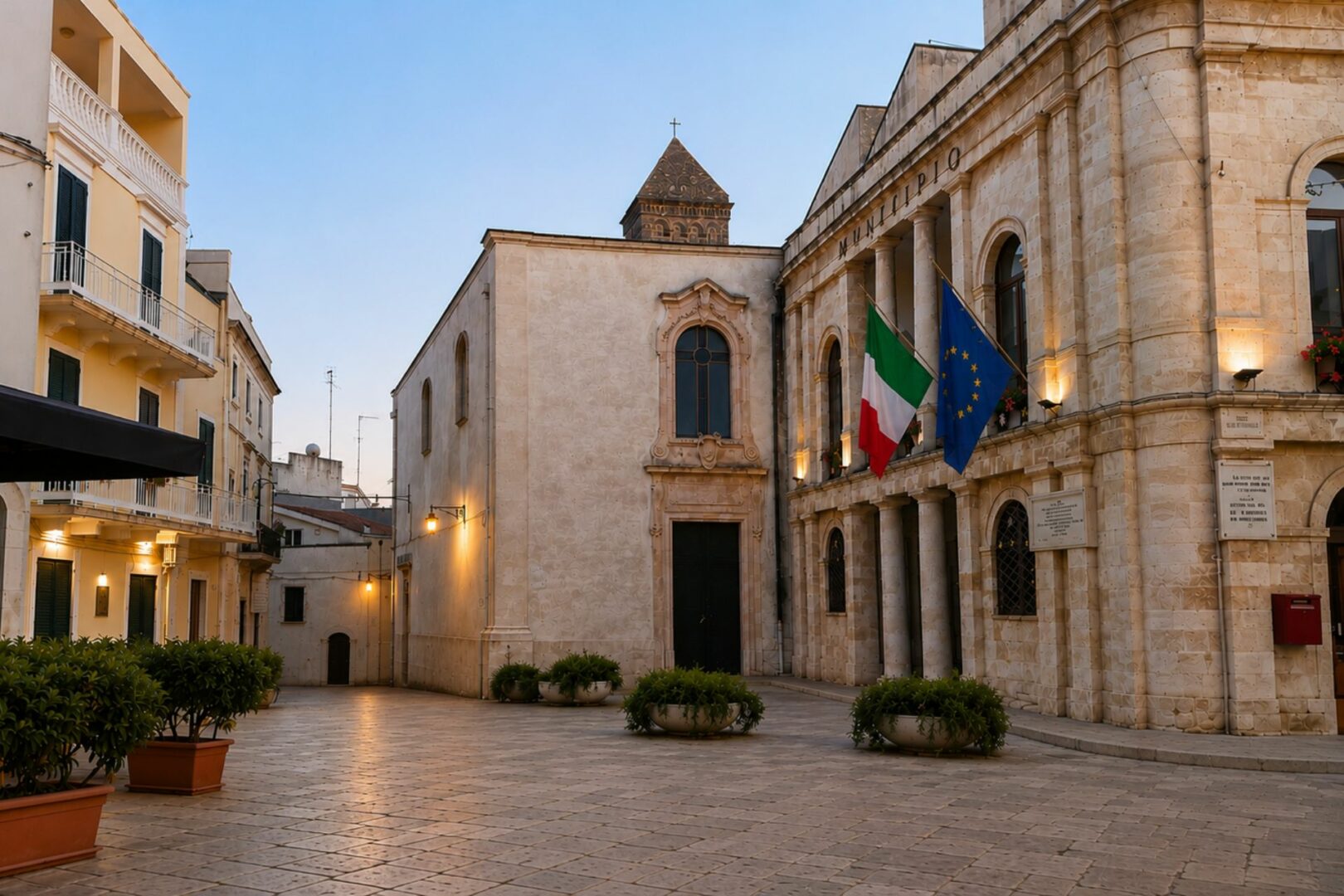
The Normans, Swabians, Angevins and Aragonese They left a significant mark on the urban landscape and the organisation of the local area. Over the centuries, the city gained increasing prestige, eventually becoming the political and administrative centre of one of the most important fiefdoms in the Kingdom of Naples. Even today, the historic centre retains the’medieval town layout, with narrow alleyways, cosy squares and views that seem to have remained unchanged over time.
The Acquaviva d’Aragona: the family that made Conversano great
To talk about Conversano is inevitably to talk about the Acquaviva d’Aragona family. No other family It has, in fact, had such a profound and lasting influence on the city’s history. The Acquaviva They were a powerful noble family originally from Abruzzo who, through strategic alliances, marriages and political appointments, managed to extend his control over vast territories in southern Italy. The connection with the Aragonese dynasty This further enhanced the family’s prestige; over the centuries, they accumulated titles, lands and privileges.
Conversano became one of the most important centres of their realm. From here, the counts administered a vast territory and made decisions that influenced the economic, social and political life of much of central Apulia. Among the most famous figures, one that stands out is Giangirolamo II Acquaviva of Aragon, who went down in history under the nickname of “The One-Eyed Man of Puglia”. A man of great power and a controversial figure, he ruled the county in the 17th century, leaving an indelible mark on local history. Even today, his name is linked to legends, folk tales and stories that add to the city’s charm. The Acquaviva family’s legacy is evident everywhere: in the historic buildings, in the works of art commissioned by the family and, above all, in the magnificent castle overlooking the historic centre.
- Conversano Castle: the heart of aristocratic power:
Conversano Castle is undoubtedly the monument the city’s symbol. Located at the highest point of the old village, is one of the most important fortified complexes in Puglia. Its origins date back to’Norman period, but the building was extended and altered several times over the centuries. The Acquaviva d’Aragona they gradually converted him as a defensive fortress a prestigious aristocratic residence, capable of reflecting the family’s prestige.
Looking at it from the outside, what strikes you are the imposing towers and the mighty walls which still dominate the urban landscape today. Inside, however, there are elegant courtyards, historic settings and halls which recount the life of the The Apulian nobility between the Renaissance and the Baroque periods. One of the main reasons for interest is the Civic Art Gallery, which houses the famous series of paintings created by Paolo Finoglio. The paintings dedicated to Jerusalem Delivered by Torquato Tasso are among the finest examples of Baroque painting in Puglia and attract visitors from all over Italy.
To truly understand the historical significance of Conversano, a visit to the castle is the ideal place to start! - The Cathedral of Santa Maria Assunta:
Just a short walk from the castle stands the Cathedral of Santa Maria Assunta, one of the the most significant examples of Apulian Romanesque architecture. The present building dates mainly from the 11th century, although it has undergone numerous alterations and modifications over the centuries. The façade elegant and understated perfectly reflects the characteristics of the Apulian Romanesque, whilst the interior holds works of art and historical records of the long religious history of the city. The cathedral occupies a picturesque location and helps to create one of Conversano’s most striking views. The square which surrounds it is, in fact, one of the the most photographed spots in the city centre historical. Visiting the cathedral means not only admiring an important religious monument, but also gaining an understanding of the role that faith and ecclesiastical institutions have played in the city’s development over the centuries. - The Monastery of St Benedict and the power of the abbesses
One of the most fascinating aspects of Conversano’s history concerns the Monastery of San Benedetto. This important women’s religious complex was for a long time one of the the region’s most influential spiritual centres. The abbesses of the monastery enjoyed extraordinary privileges which guaranteed them a degree of autonomy rarely granted to female religious institutions of the time. For centuries, the monastery exerted a a significant influence on economic and social life of the region. Its history was often intertwined with that of the Counts of Conversano, helping to create a balance of power that was unique in Southern Italy. Today, the complex remains a valuable testament to the town’s history and is a particularly interesting stop for anyone wishing to learn more about the lesser-known aspects of the local past.
A stroll through the historic centre of Conversano
One of the best ways to explore Conversano is to leave your car behind for a few hours and simply let your curiosity guide you. The historic centre is a fascinating labyrinth of cobbled alleyways, stone arches, small squares and stately palaces that bear witness to centuries of history. Every street leads to different views and offers ever-changing perspectives on the town’s architectural heritage.
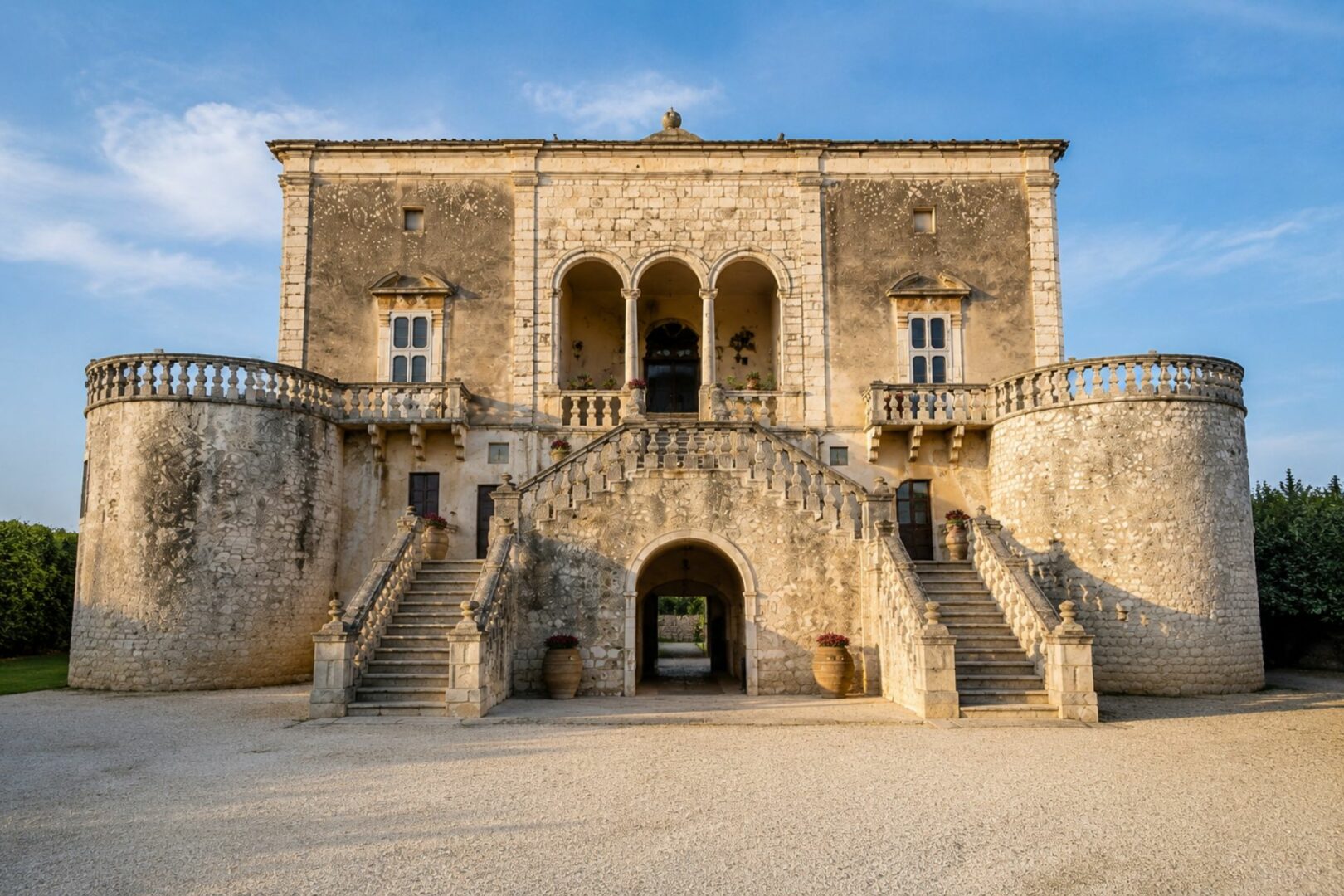
As you stroll through the town, you’ll come across elegant wrought-iron balconies, ornate doorways, hidden courtyards and shops that help to keep the village’s identity alive. Among the places not to be missed on a walk through the historic centre of Conversano are:
- Piazza Castello;
- Piazza XX Settembre;
- the Civic Tower;
- the Church of Saints Cosmas and Damian;
- the stately homes in the historic centre;
- the viewpoints overlooking the surrounding countryside.
The best times to visit are between late afternoon, when the The golden light of the sunset brings out the colours of the local stone and creates a particularly evocative atmosphere.
Why visit Conversano whilst on holiday in Monopoli
Families can visit the castle and walk safely in the historic centre, couples find romantic views and peaceful squares, whilst culture lovers can explore further centuries of Apulian history through monuments and museums. The combination of the sea, historic villages and artistic heritage is one of the main attractions of central Puglia, and Conversano is one of the most authentic examples of this.
Conversano It is a destination that manages to to surprise anyone who decides to spend a few hours on it. The splendour of the castle, the charm of its churches, the legacy of the Counts of Acquaviva d’Aragona and the beauty of the historic centre make this town one of the most interesting cultural destinations in the area around Monopoli. For those wishing to discover a different side of Puglia from its beaches and seaside resorts, Conversano is the ideal choice: authentic, elegant and steeped in history.
FAQs about Conversano
- How far is Conversano from Monopoli?
Conversano is about 10 kilometres from Monopoli and can be reached by car in around 15–20 minutes. For this reason, it is one of the most convenient day trips for those staying on the coast who wish to visit a historic village further inland. - What is Conversano famous for?
Conversano is best known for the Acquaviva d’Aragona Castle, its medieval old town, the Cathedral of Santa Maria Assunta and the Monastery of San Benedetto. The town is also closely linked to the history of the Counts of Acquaviva d’Aragona, who ruled it for several centuries. - What’s worth seeing in Conversano in half a day?
In half a day, you can visit Conversano Castle, the Civic Art Gallery, the Cathedral and the Monastery of San Benedetto, and stroll through the historic centre amongst its squares, narrow streets and stately homes. - Is Conversano a good place to visit with children?
Yes, Conversano is also suitable for families with children. The historic centre is lovely to explore on foot, and the castle can make the visit more engaging even for the youngest children. - Is it worth visiting Conversano from Monopoli?
Yes, Conversano is one of the best day trips you can take from Monopoli. As it’s only a short distance away, you can easily fit in a visit in the afternoon or as part of a day spent exploring the Apulian hinterland.