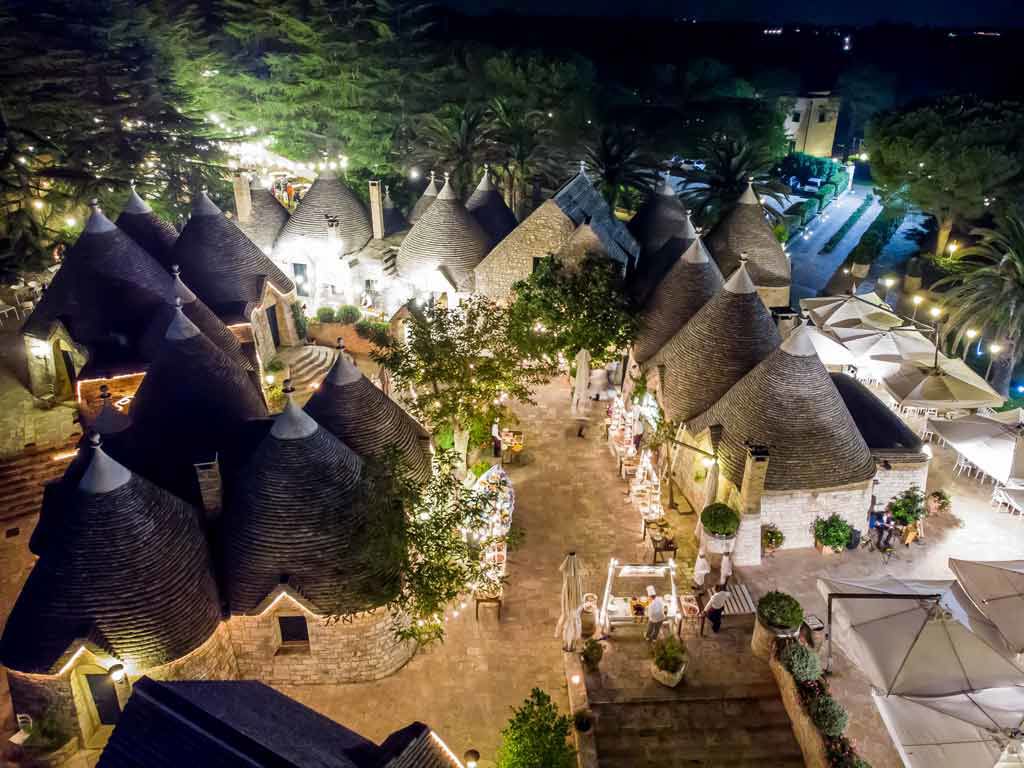


The Trulli of Alberobello, a symbol of Puglia blending history and tradition: what to see and a visitor’s guide
There are places that seem to have come straight out of a fairy tale and which, for that very reason, are impossible to forget. The Trulli of Alberobello I am one of them.
Their distinctive stone buildings, their conical roofs, the narrow streets winding their way up between the houses, and the light colour of the limestone have made Alberobello one of the best-known destinations in Puglia. But behind the picture-postcard image lies so much more: the trulli tell an ancient story, reveal a unique building technique and illustrate the relationship between people and the landscape of the Itria Valley. In this guide, we discover What are trulli? What is their history? Why is Alberobello a UNESCO World Heritage Site? What is there to see during a visit, and which neighbourhoods are the most interesting to explore?.
What are trulli?
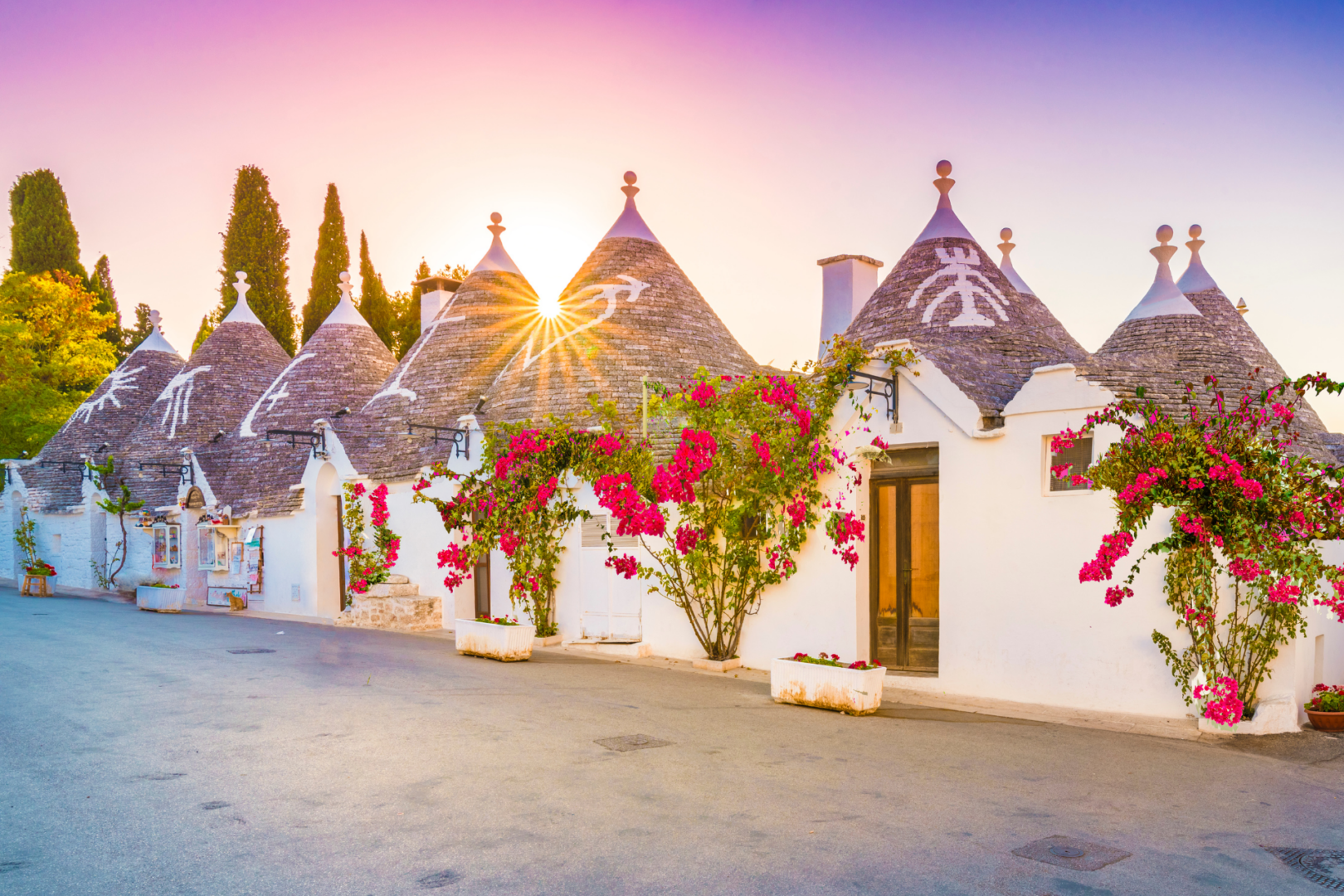
The trullo It is a traditional stone building characterised by its distinctive conical roof or, more precisely, by a structure built using courses of overlapping stones. The most important feature is the drywall construction technique, that is, without the use of mortar as a binder between the stones. The walls are built using local limestone, whilst the roof consists of layers of stone slabs that rise progressively towards the top. This building technique has very ancient origins and is found in various parts of the Mediterranean. In Puglia, however, one of its most recognisable examples is found precisely in the trulli of the Itria Valley.
Why do trulli have conical roofs?
The shape of the roof is probably the feature that makes a trullo instantly recognisable. The roof consists of overlapping layers of stone and generally culminates in a pinnacle. This distinctive structure is therefore not merely an aesthetic feature, but the result of a building technique developed over the centuries using locally available materials. On closer inspection, one realises that what may appear to be a simple structure is in fact the result of a highly distinctive architectural system.
The history of the Trulli of Alberobello
The history of the trulli of Alberobello It is closely linked to the history of the area and its agricultural heritage. Dry-stone structures were used both in the countryside, as shelters and farm buildings, and as actual dwellings. According to the records UNESCO, settlements in the area date back to very ancient times, and the territory of Alberobello began to develop gradually until the settlement clusters that we now recognise as the Monti and Aia Piccola neighbourhoods were formed.
Over the centuries, the number of trulli increased to the point where they formed a distinct urban fabric characterised by this unique architectural style. The dry-stone construction technique, which arose from the use of locally sourced stone, has thus become an integral part of Alberobello’s landscape and identity.
Why is Alberobello a UNESCO World Heritage Site? The value of the The Trulli of Alberobello goes far beyond their striking appearance. In the 1996 The site has been inscribed on the UNESCO World Heritage List thanks to the exceptional value of its architecture and the preservation of its traditional urban fabric. The recognition relates in particular to the system of trulli and their relationship with the historic urban landscape. UNESCO considers Alberobello to be a significant example of the a long Mediterranean tradition of drystone construction and the durability of this technique over time. The UNESCO site mainly comprises the The Monti district and the Aia Piccola district, as well as a number of buildings and sites of particular historical and architectural significance.
It is precisely these neighbourhoods that enable us to better understand that the trulli are not simply individual buildings, but part of a fully-fledged urban landscape.
Rione Monti: the best-known trulli district
When you think of trulli of Alberobello, the image that most likely springs to mind is that of the Monti District. The neighbourhood stretches along the hillside and comprises over a thousand trulli scattered along its streets. It is the best-known and most photographed area of Alberobello and the one that offers some of the town’s most iconic views. As you stroll through the streets of the Rione Monti, you’ll come across trulli of various sizes, arches, small squares and numerous vantage points. It is also the part of town most geared towards tourism, with numerous businesses housed within the characteristic stone buildings.
The best way to explore the Rione Monti: The advice is simple: to walk at a leisurely pace. Rather than looking for a single attraction, it’s worth taking in the whole picture. The narrow streets, the succession of conical roofs, the varied shapes of the trulli and the architectural details make the stroll itself the main attraction. It is also worth venturing away from the busiest streets for a few minutes to view the neighbourhood from different vantage points.
Aia Piccola district: the most authentic side of the trulli: whilst the Rione Monti district is the best-known part of Alberobello, Little Aia It offers a better insight into the residential and historical character of the town. The neighbourhood is situated on the south-eastern side of Alberobello and is characterised by narrow alleys, small squares and trulli, which retain a particularly charming atmosphere. The Municipality of Alberobello describes Aia Piccola as an area free from commercial activity, where visitors can catch glimpses that bear witness to what part of the town once looked like.
For this reason, it is a must-see for anyone who wants to to see the trulli of Alberobello even beyond the more typical tourist image.
What else is there to see in Alberobello apart from the trulli?
A visit to Alberobello need not be limited to a stroll amongst the stone houses. The historic centre, in fact, boasts other interesting sights that can be included in the same itinerary.
- The Trullo Sovrano
The Trullo Sovrano is one of the the most distinctive buildings in Alberobello and is notable for its size and its two-storey structure. It is regarded as a particularly important example of trullo architecture and forms part of the town’s historical and architectural heritage. - House of Love
Another significant building is Casa d’Amore, which is linked to the transformation of the town of Alberobello and the gradual introduction of different construction techniques. It is particularly interesting because it helps us understand how the city’s architecture has changed over time. - The Local History Museum
The Museo del Territorio – Casa Pezzolla is housed in a complex of trulli and offers visitors the chance to explore the history, architecture and culture of the area in greater depth. For those who wish to gain a better understanding of what they are seeing whilst strolling amongst the trulli, a visit to the A museum can really round off the experience.
The symbols on the roofs of the trulli: what do they mean?
One of the features that most intrigues visitors to Alberobello is the symbols painted on the roofs of the trulli. On many roofs, one can see marks, figures and symbols of various shapes, often associated in popular tradition with religious, magical or propitiatory meanings. It is important, however, not to regard them all as a truly universal code: over time, various interpretations have been attributed to these symbols and their meaning may vary. Observing them remains, nonetheless, one of the most fascinating aspects of a visit, particularly as it encourages visitors to look more closely at the roofs of the trulli.
How many trulli are there in Alberobello? The concentration of trulli in Alberobello is one of the factors that make the site particularly important. UNESCO highlights the neighbourhoods of The Monti District and Aia Piccola the highest concentration and best-preserved examples of this architectural style, with over 1,500 structures within the two neighbourhoods. This figure is significant because it shows that we are not dealing with just a few isolated buildings, but with a genuine an urban landscape built around the tradition of the trulli.
How long does it take to visit the Trulli of Alberobello? For a first visit to Alberobello, you could spend half a day exploring the trulli, focusing on the main neighbourhoods and the key attractions. If, on the other hand, you’d like to take your time visiting museums, historic buildings and less-frequented spots, it can be lovely to spend a whole day exploring the town. The most important thing is not to rush: part of Alberobello’s charm lies precisely in strolling through the narrow streets and taking in the details of the buildings.
When is the best time to visit Alberobello?
Alberobello is a destination that can be visited all year round. In summer, the village naturally has the liveliest atmosphere, but this is also the time of year when there are likely to be the most tourists. Spring and early autumn can be particularly pleasant for those who prefer to visit the trulli in milder temperatures and spend more time strolling around. Winter has its own charm too: with a quieter atmosphere, Alberobello allows you to focus more on the architecture and history of the village.
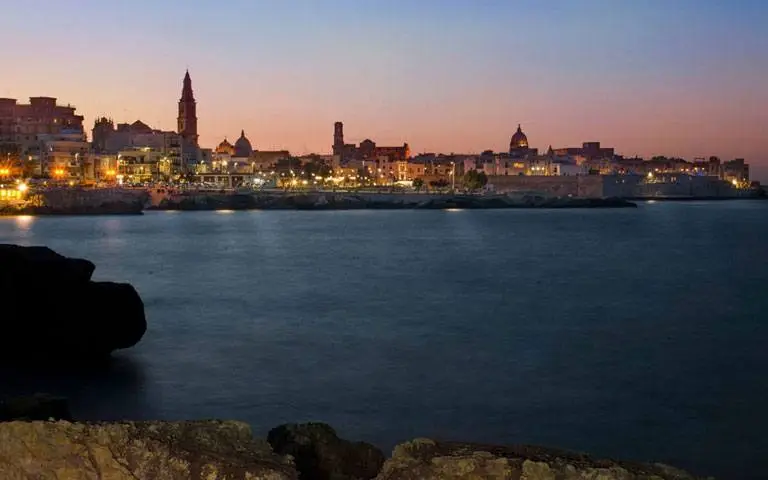
How do you get to Alberobello from Monopoli? Alberobello is one of the most interesting day trips to include during a stay in Monopoli. The two towns are strategically situated in central Apulia and can easily be included in the same itinerary dedicated to exploring the Itria Valley. Starting from Monopoli, you can spend a day in Alberobello and, depending on how much time you have, combine this with visits to other towns in the area such as Locorotondo, Cisternino or Fasano.
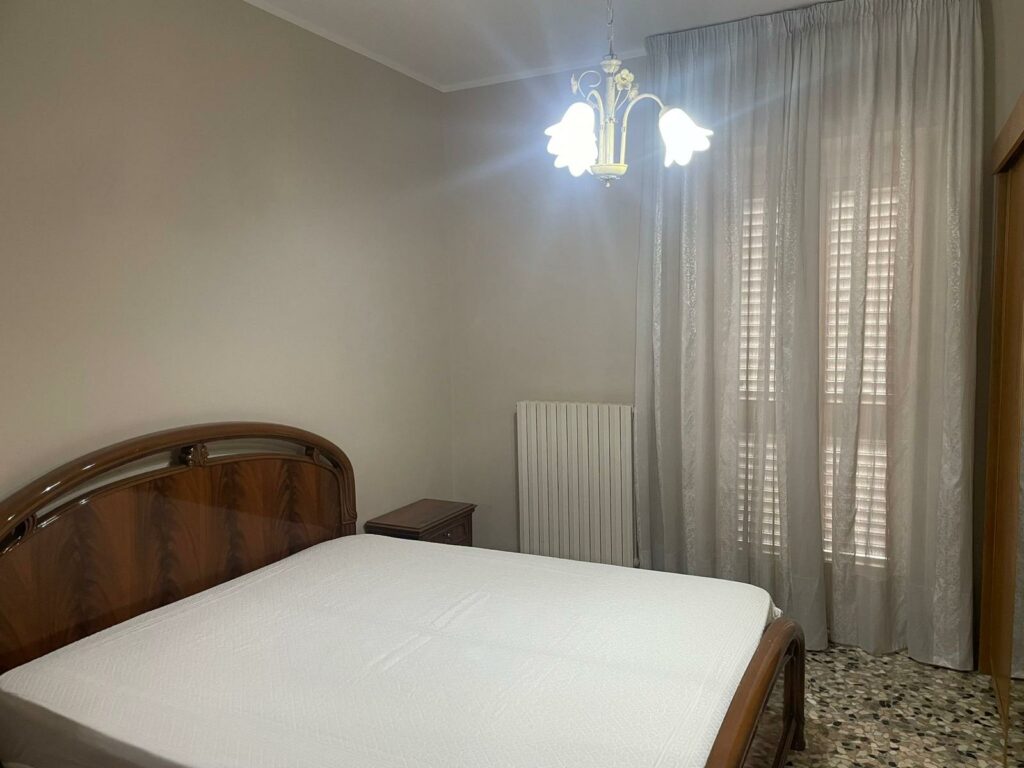
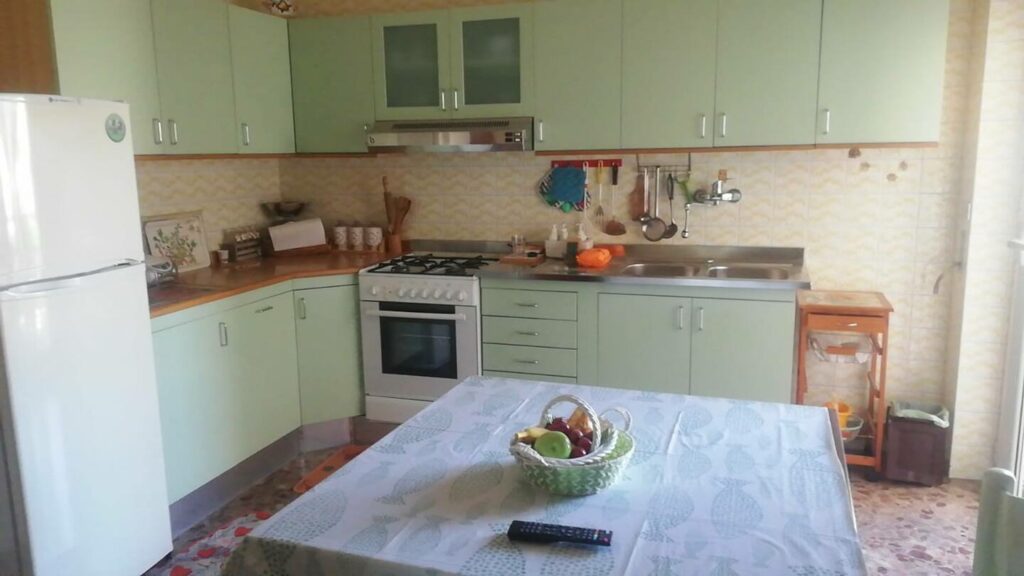
That is why choosing a holiday home in Monopoli or another accommodation option in the area could be an attractive option for those wishing to visit several destinations during the same trip.
Alberobello and Monopoli: two different ways to experience Puglia: Visiting Alberobello whilst on holiday in Monopoli allows you to combine two very different experiences. On the one hand, there is Monopoli, with its sea, historic centre, Old Harbour and the beaches along the coast; on the other hand, there is Alberobello with its trulli and the landscape of the Itria Valley. It is precisely this variety that makes central Puglia so fascinating: in just a few days, you can go from the seaside to the villages, from coves to the countryside, and from seafood to the culinary traditions of the inland areas.
If you’re planning a holiday, you might also want to take a look at our guide dedicated to Alberobello, near Monopoli and find out how to plan an itinerary in the area.
The Trulli of Alberobello: an experience to be enjoyed, not just photographed
I The Trulli of Alberobello They have become one of the best-known symbols of Puglia, but their charm does not stem solely from their distinctive shape. Their significance lies in their history, the dry-stone construction technique, their connection to the local area, and the extraordinary continuity of the urban landscape that still characterises the city’s historic neighbourhoods today. For this reason, visiting Alberobello means much more than simply taking a photograph in front of a conical roof: it means walking through a part of the history of the Itria Valley and observing at close quarters an architectural style born of the region’s resources and needs.
Plan your trip to discover Alberobello and Puglia! If you’d like to visit Alberobello, its trulli and the other towns in the Itria Valley, Monopoli can serve as a convenient base from which to plan a wider itinerary through central Apulia. On Monopoli Holiday Home You can search for hotels, flats, holiday homes, B&Bs, holiday resorts, country houses, trulli and other accommodation options in the area.
Choose the option that best suits your needs and experience Puglia by combining the seaside, villages, history, nature and traditions.
Discover the accommodation options available in Monopoli and plan your stay in Puglia.
FAQs about the Trulli of Alberobello
- Why is Alberobello famous for its trulli?
Alberobello is famous for the extraordinary concentration of trulli preserved in its historic centre. The neighbourhoods of Rione Monti and Aia Piccola form the main core of the site recognised as a UNESCO World Heritage Site. - Are the Trulli of Alberobello a UNESCO World Heritage Site?
Yes. The Trulli of Alberobello were inscribed on the UNESCO World Heritage List in 1996 for their outstanding architectural, historical and cultural value. - Which is the most famous neighbourhood of trulli in Alberobello?
The Rione Monti is the best-known and most visited neighbourhood. It is home to over a thousand trulli and offers one of the most characteristic views of Alberobello. For a more peaceful experience that gives a sense of the historic residential character of the town, it is also worth visiting the Rione Aia Piccola. - What is the difference between Rione Monti and Aia Piccola?
The Rione Monti is the best-known area and the one most geared towards tourism, whilst Aia Piccola retains a more residential and less commercial atmosphere. Both form part of the UNESCO site. - How long does it take to visit the trulli in Alberobello?
For a first visit, you could spend half a day exploring the trulli districts. If you have a whole day, you can also visit museums, historic buildings and take a more leisurely stroll through the centre of Alberobello. - Can you visit the trulli from Monopoli?
Yes. Alberobello is an ideal destination to include in an itinerary whilst staying in Monopoli and can also be combined with other towns in the Itria Valley. - Where else can you see trulli apart from Alberobello?
Trulli can be found in various parts of the Itria Valley and central Apulia. However, Alberobello is home to the highest concentration of these structures and boasts the most significant and best-preserved examples of this unique architectural heritage.